From the parking space to a city service
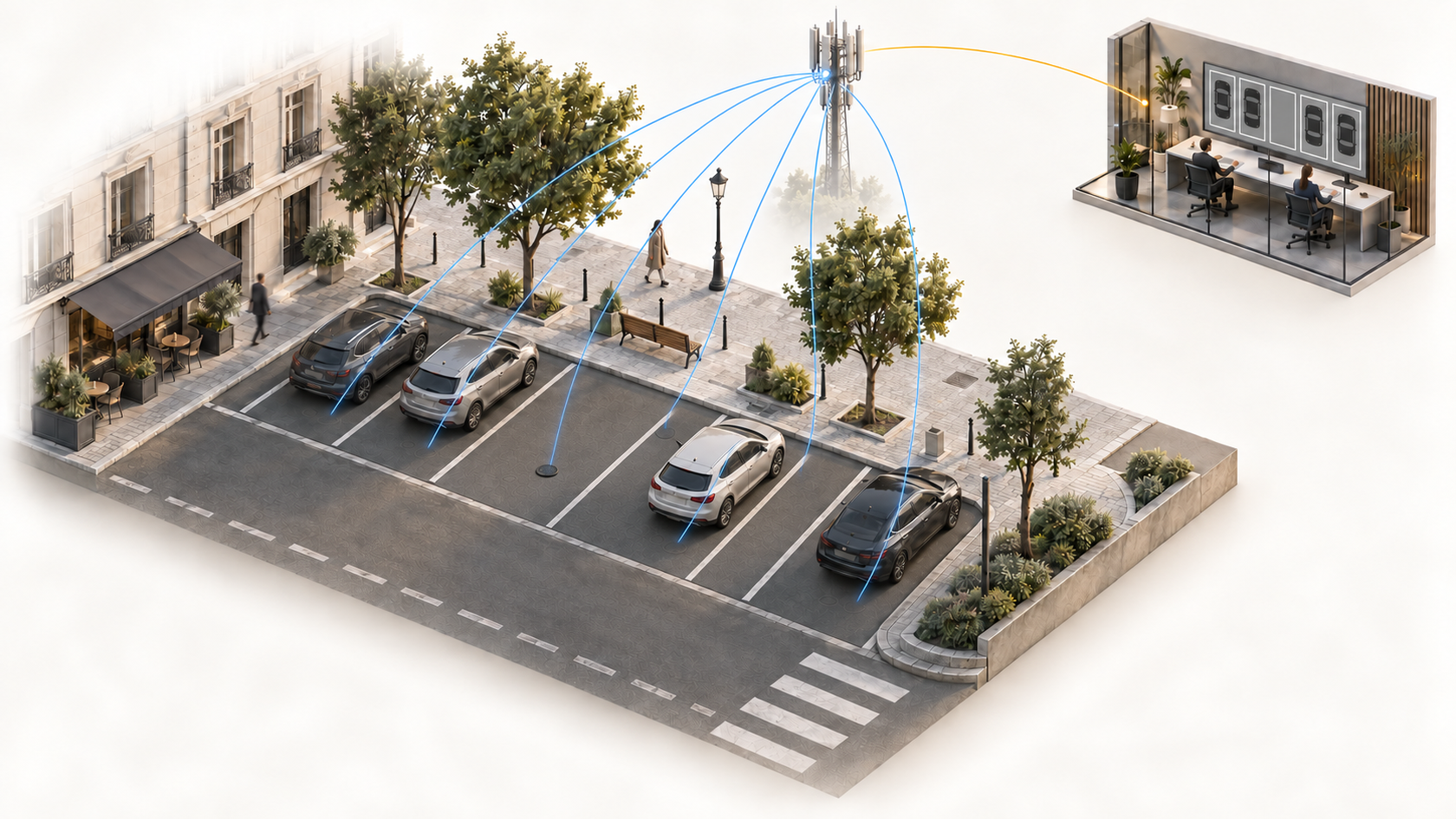
Smart parking is not a single device but a connected service. A sensor embedded in the parking space measures occupancy, sends data directly over the NB-IoT mobile network, and city applications turn it into useful information for drivers and operators.
The role of the Intelliport IPS-404
The IPS-404 is Intelliport’s own parking-space sensor, offered to system integrators and developers of smart-city platforms.
- Dependable occupancy sensing: combined radar and magnetic detection.
- Direct mobile connectivity: NB-IoT communication over the mobile network without a local data collector.
- Flush-mounted construction: one sensor per space, with a replaceable internal unit.
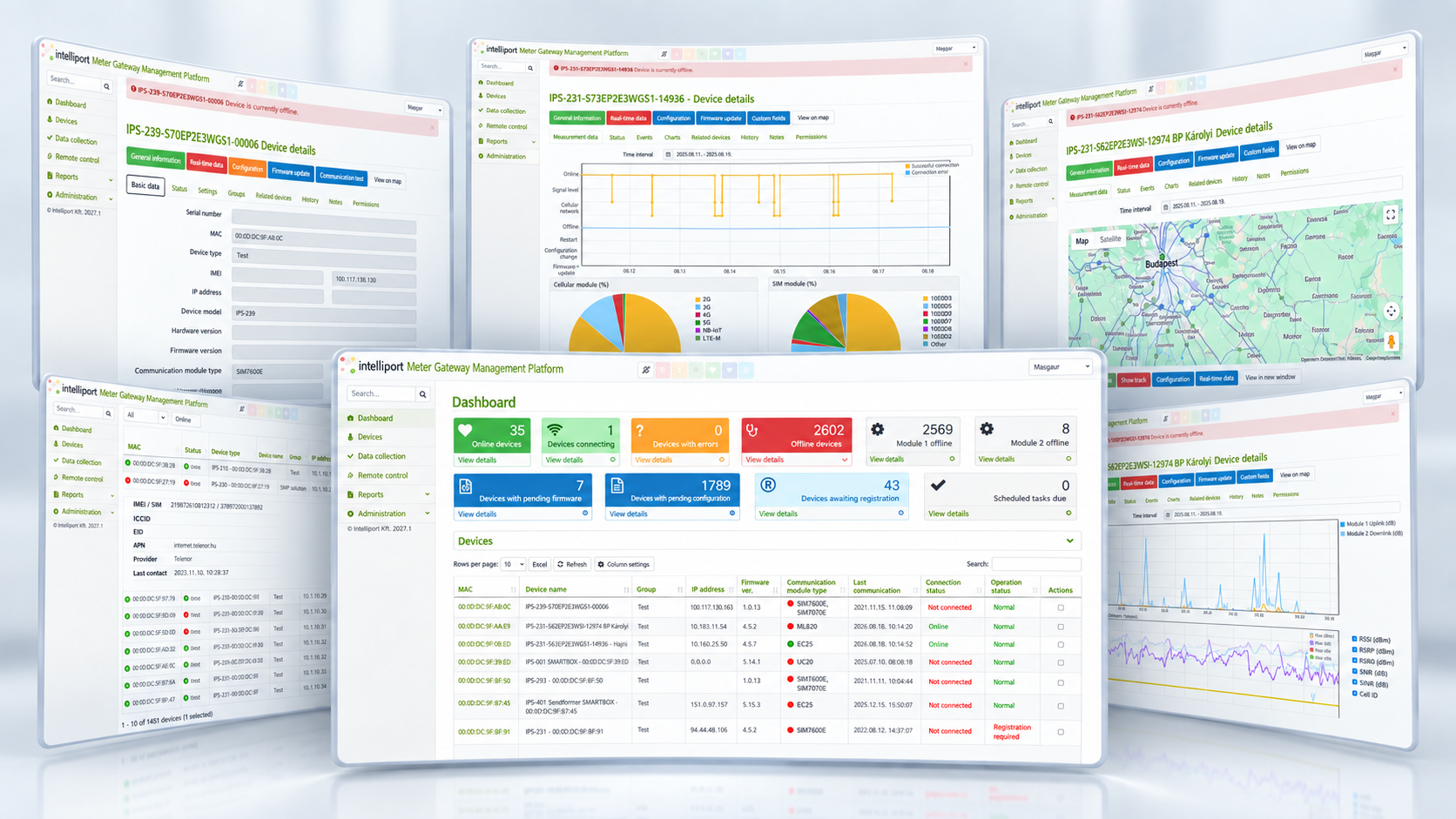
- Central sensor management: supervision of operating status, connectivity, battery and remote configuration.
- Optional vehicle identification: recognition of vehicles equipped with an assigned BLE/iBeacon identifier.
Smart Lynx, our system-integrator partner
Smart Lynx is one of our system-integrator partners for smart-parking projects. Building on Intelliport sensors, Smart Lynx installs the sensors and supplies its own products for the city service layer.
- Parking-management system and dashboard: real-time and historical data, statistics and operating workflows.
- Parker mobile application: occupancy map, filtering by parking-space type and parking functions depending on the deployed configuration.
- Street parking-guidance displays: showing drivers the number of free spaces nearby.
- System integration: API connections to city, operator and other third-party systems.
- On-site deployment: sensor installation and technical integration of the solution.
Beyond occupancy: checking entitlement
Optional vehicle identification allows the system to detect not only whether a space is occupied, but also a pre-assigned BLE/iBeacon identifier. The receiving system can compare that identifier with a parking-permit register.
One use case is checking spaces reserved permanently or during defined periods for local residents. The system can flag a space that is occupied when the detected vehicle has no matching entitlement. This is not camera-based number-plate recognition: identification relies on an electronic tag assigned to the vehicle.
The solution data path
- Field sensing: the IPS-404 detects occupancy and, when enabled, the vehicle identifier.
- NB-IoT transfer: the sensor communicates directly over the mobile network.
- Sensor management: Intelliport’s central layer manages the device fleet and passes on the required data.
- Smart Lynx applications: the parking-management system, Parker app and street displays use the data in their respective user workflows.
What needs to be agreed before deployment
- on-site conditions for parking spaces, road surfaces and mobile-network coverage;
- required occupancy-detection accuracy and handling of operating events;
- whether vehicle identification is required, and how identifiers are issued and managed through their lifecycle;
- the permit register, data-handling rules and enforcement workflow;
- responsibility and integration boundaries between Intelliport, Smart Lynx, the operator and any additional city systems.