Sensor data with the option of private infrastructure
LoRaWAN is an LPWAN technology designed for small messages and energy-efficient endpoints. LoRa provides the radio transmission; LoRaWAN defines network communications, device activation and message handling.
Alongside cellular NB-IoT and LTE-M, LoRaWAN can be deployed with privately operated gateways and servers or purchased as a network service. Private infrastructure also places responsibility for coverage and operations with the network owner.
Network architecture
LoRaWAN components and how they work together
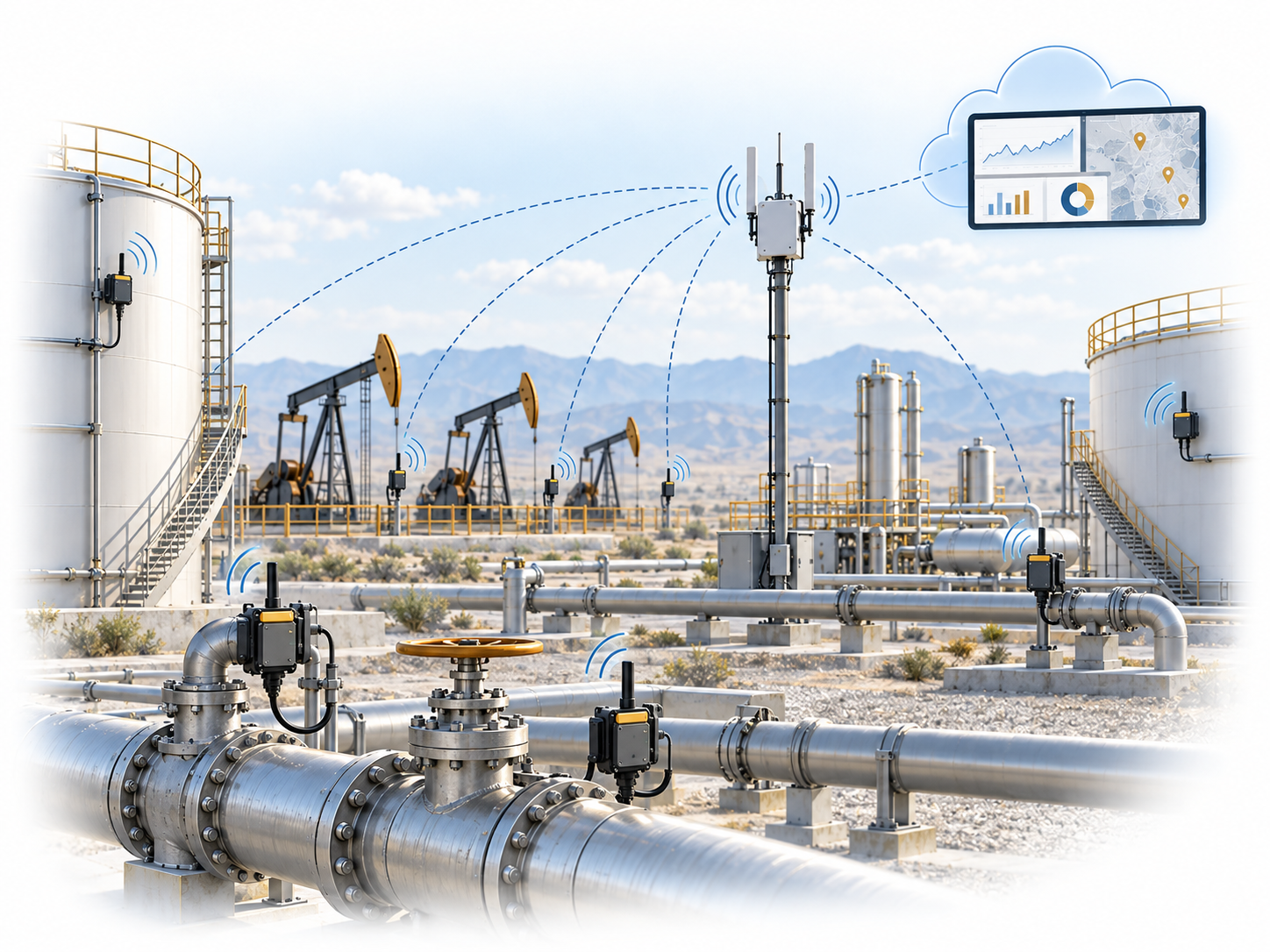
Endpoints reach a network server through one or more gateways. Gateways forward radio messages over IP; the network server manages network operations and removes duplicate messages received by multiple gateways. The application server processes measurements and connects them to business systems.
LoRaWAN
EndpointsMeters and sensors
LoRa radio
GatewayForwarding radio messages
IP
Network serverNetwork and message handling
IP
ApplicationData and integration
Multiple gateways can receive the same message
Design considerations
Connectivity selected for the task
Message profile and response time
Suited to periodic measurements and short status messages. Payload size, reporting intervals and downlink traffic are planned together; continuous streaming, video and deterministic real-time control call for a different connection.
Radio environment and energy
Terrain, building structure, antennas and radio settings together determine connectivity. Measurement intervals and receive modes also affect power consumption. Regional frequency plans and local radio-use limits are part of network design.
Private network or service
Gateway placement, IP backhaul, server operations and key management all need consideration. Device activation, monitoring and application integration are planned from the outset.
Technology selection
Different requirements, different communications
LoRaWAN
A network using LoRa radio in regional licence-exempt bands. Private infrastructure and operator-managed services are both options; endpoints communicate through gateways.
NB-IoT
A cellular IoT technology using operator spectrum and infrastructure. Endpoints connect directly to the cellular network, not a local LoRaWAN gateway.
LTE-M
Also a cellular connection, with different traffic and mobility capabilities. Considered where applications need greater communications flexibility and local networks support it.
Endpoint operation
Three device classes with different receive modes
Class A
The baseline mode supported by every LoRaWAN endpoint. Each uplink is followed by two short receive windows in which the server can respond. A subsequent downlink may need to wait for another endpoint transmission. Well suited to battery-powered sensors reporting periodically.
Class B
Adds scheduled receive slots synchronised to network beacons alongside Class A behaviour. Enables more predictable downlink opportunities, requiring additional receive energy and network support.
Class C
The endpoint listens for downlinks almost continuously except while transmitting. This reduces waiting time but increases power consumption, making it primarily suitable for externally powered devices.
Deployment and operations
Beyond the radio link
Network topology
LoRaWAN uses a star-of-stars topology, not an endpoint mesh. Multiple gateways can provide additional reception opportunities, but capacity is planned around message traffic and radio conditions. Gateways require reliable IP backhaul.
Activation and key management
LoRaWAN uses AES-128-based security mechanisms. With OTAA activation, a join procedure establishes the session and its keys. Unique device keys, protected storage and controlled access are essential; servers and integrations also require security design.
Adaptive radio settings
ADR can adjust data rate and transmit power based on the radio link. For sensors at fixed locations it can improve energy and network-capacity use. Mobile devices and rapidly changing radio conditions need separate consideration.
Applications
Technology supporting operations
Agricultural data collection
Transmitting soil moisture, weather and greenhouse readings from distributed measurement points through a local gateway.
Collecting small consumption and status messages from compatible meters, with connectivity matched to reading intervals.
Building monitoring
Tracking temperature, humidity and indoor environmental readings using wireless sensors.
Industrial condition monitoring
Periodic equipment status reports and threshold events, separate from high-speed local control loops.
Urban environmental monitoring
Transmitting readings from distributed environmental measurement points at intervals suited to placement and network capacity.
Logistics condition tracking
Infrequent reports of storage conditions, temperature and asset status within available network coverage.
Devices and platforms
Related products
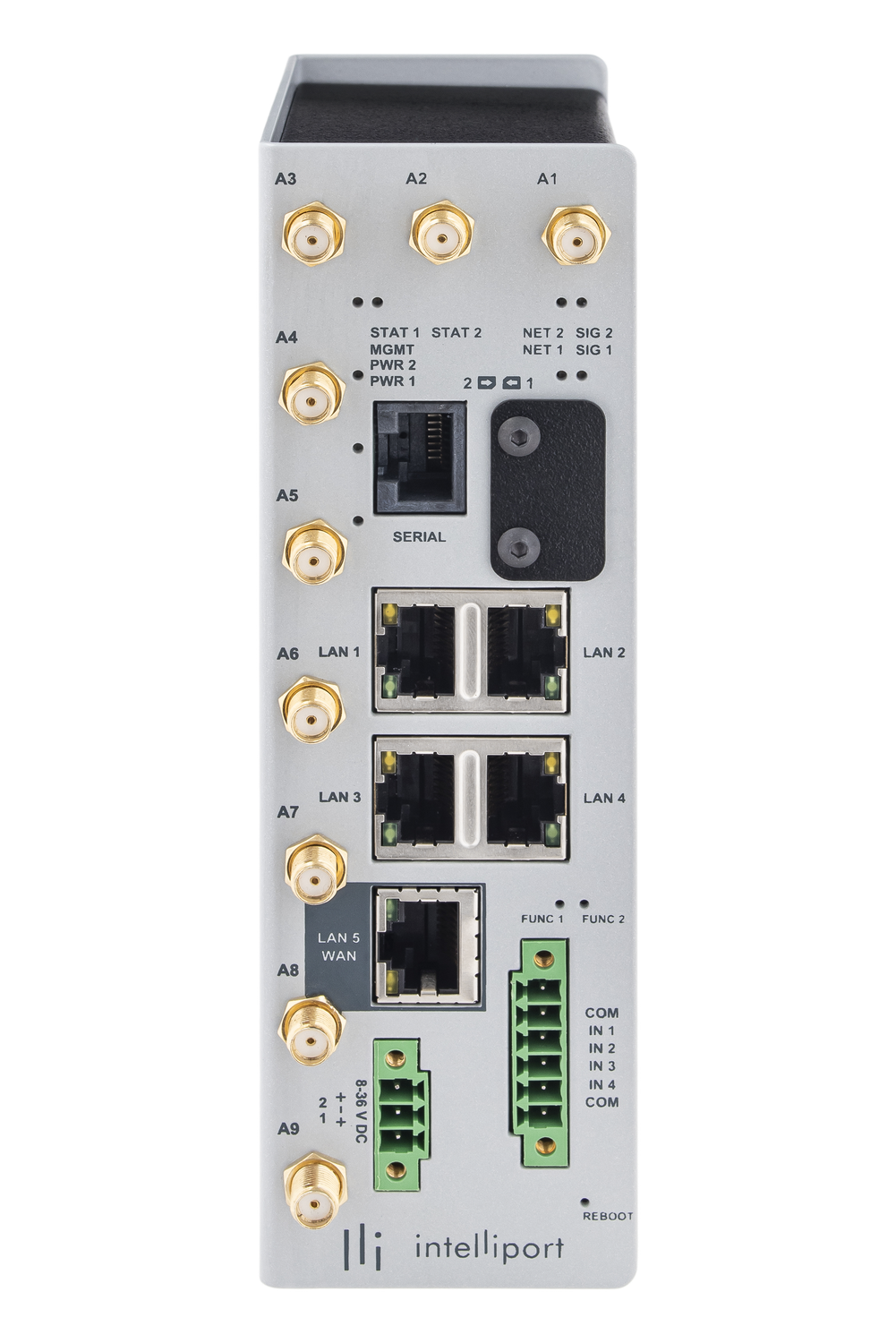
The IPS-239 industrial router can provide IP backhaul for a LoRaWAN gateway. It is neither a LoRaWAN gateway nor a LoRa radio endpoint; selecting radio devices and the server platform is a separate task.
Industrial IoT router
IPS-239 Non-Stop IoT Router Pro
Industrial router connecting field equipment to central systems, with remote management.