What does smart metering mean?
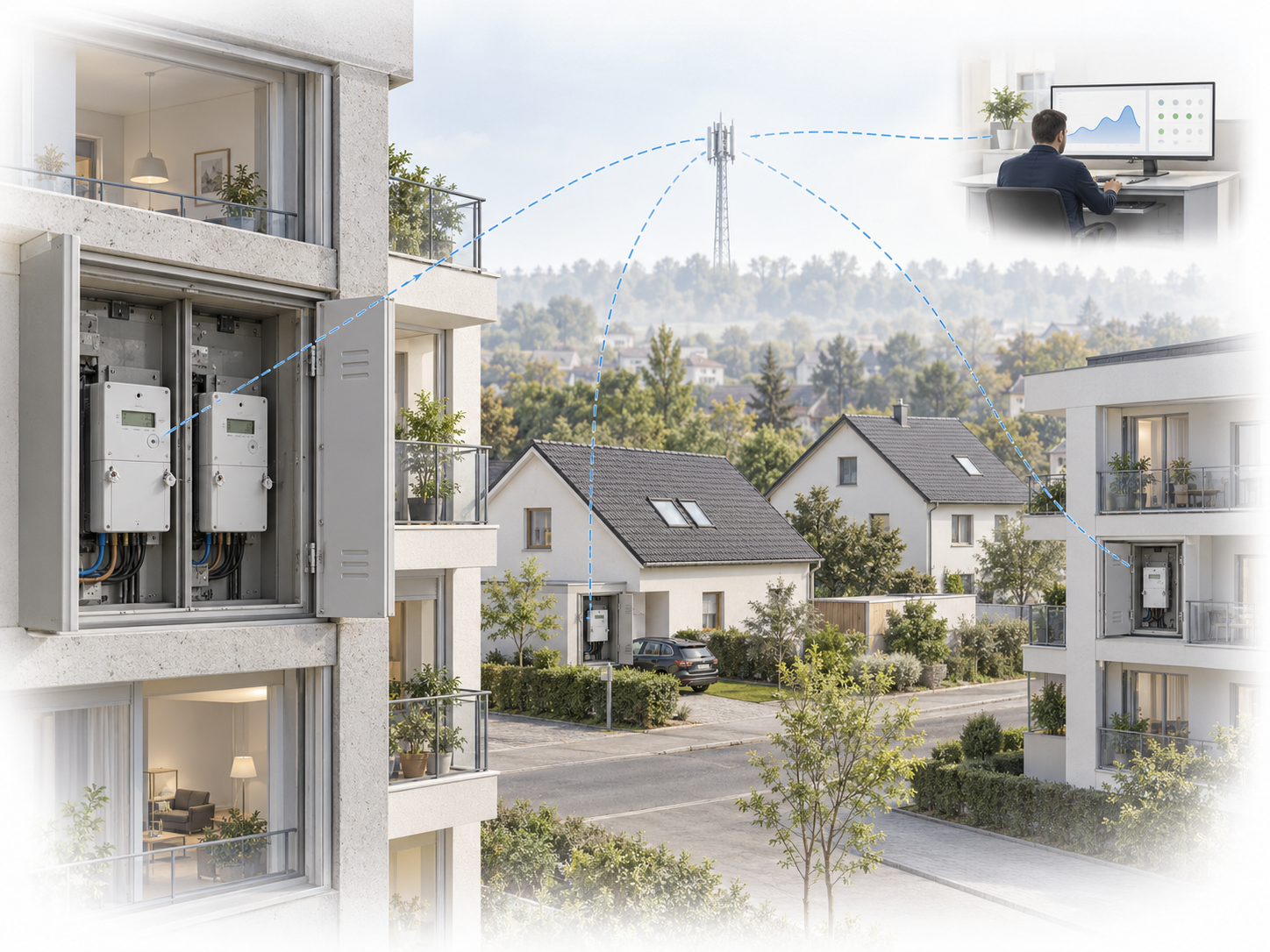
Smart metering connects regular consumption measurement with remote data collection and central management of the meter estate. In residential electricity metering, household smart meters use their own built-in communications modules to reach IntelliHES directly over a mobile network.
Timestamped readings reveal how consumption changes over time, alongside the cumulative consumption recorded at a reading. Utilities also need to know which meters have delivered data, where readings are missing and which readout tasks require attention.
The solution covers smart metering of electricity, gas and water consumption. Direct mobile connectivity from smart electricity meters is the main example. Gas and water metering uses the meter’s own communications or a supplementary gateway for meters without communications, with integration matched to the specific meter and central system.
-
Electricity: collect consumption values and time-based consumption profiles from residential smart meters.
-
Gas: regularly collect readings and track consumption changes from compatible gas meters.
-
Water: collect readings and consumption time series to review changes in water use over time.
-
Measurement: the meter records supported consumption values and measurement data.
-
Direct connectivity: built-in mobile communications carries readings to the central system.
-
Central collection: IntelliHES queries and displays readings and makes them available for checking.
-
Meter estate operation: operators share a workspace for meter records, provisioning and readout tasks.
Benefits for utilities and consumers
Regular readings support meter reading operations, customer service and understanding of consumption. Their value comes from an updated view of the distributed meter estate.
For utilities
- Fewer site visits for readings: remotely available data allows visits to focus on work that requires physical access.
- Visible data arrival: daily checks show available and missing readings, while task tracking reveals successful and failed readouts.
- Shared meter records: identifiers, models and communications details across supported manufacturers can be managed centrally.
- Better inputs for downstream processing: regularly collected readings can feed utility settlement and analysis workflows through integration with the receiving system.
- Targeted customer service and investigation: readings, data gaps and readout tasks for an individual meter can be reviewed together.
- Supporting prevention of unauthorised consumption: analysis of consumption patterns and meter-provided event and status data helps identify suspicious deviations and target inspections. A deviation is a signal for investigation; the utility’s inspection process establishes whether consumption is unauthorised.
- Enabling more sophisticated tariff packages: readings at an appropriate time resolution allow tariffs tailored to time periods and consumption profiles to be designed in connected tariff and settlement systems. For electricity, this can also encourage shifting consumption to more favourable periods.
For consumers
- Less coordination around readings: remote reading reduces the occasions requiring personal access for a reading.
- A more detailed consumption picture: comparing measured periods helps explain when and how electricity use changes.
- Informed energy use: making readings available through an appropriate customer channel supports the evaluation of habits and savings opportunities.
- Tariff choices aligned with energy habits: tariff packages based on detailed readings and clear consumption feedback support energy-conscious decisions and scheduling electricity use in more favourable periods, according to available utility offers.
- Discussions grounded in readings: utilities can investigate consumption questions using specific meter data.
Consumer portals, tariff package management, billing and analysis for investigating unauthorised consumption are delivered through the utility’s connected systems and processes. IntelliHES provides the meter data collection and meter management foundation; available event data depends on the capabilities of the specific meter.
How the solution works
The typical data path is straightforward: residential smart meter built-in mobile communications IntelliHES. The meter’s own communications module provides direct connectivity; this path does not require a separate gateway.
Residential smart electricity meter
Measures household consumption and makes supported readings available through its own communications unit.
Built-in mobile connectivity
The meter's communications module connects directly to the mobile network and, through it, to IntelliHES.
IntelliHES
Central meter data collection, data checks, readout task tracking and meter estate records.
Communications matched to the specific meter models, collection frequency and required measurements determine the system design. Deployment includes checking mobile coverage and the meter–IntelliHES connection.
IntelliHES: the central smart metering system
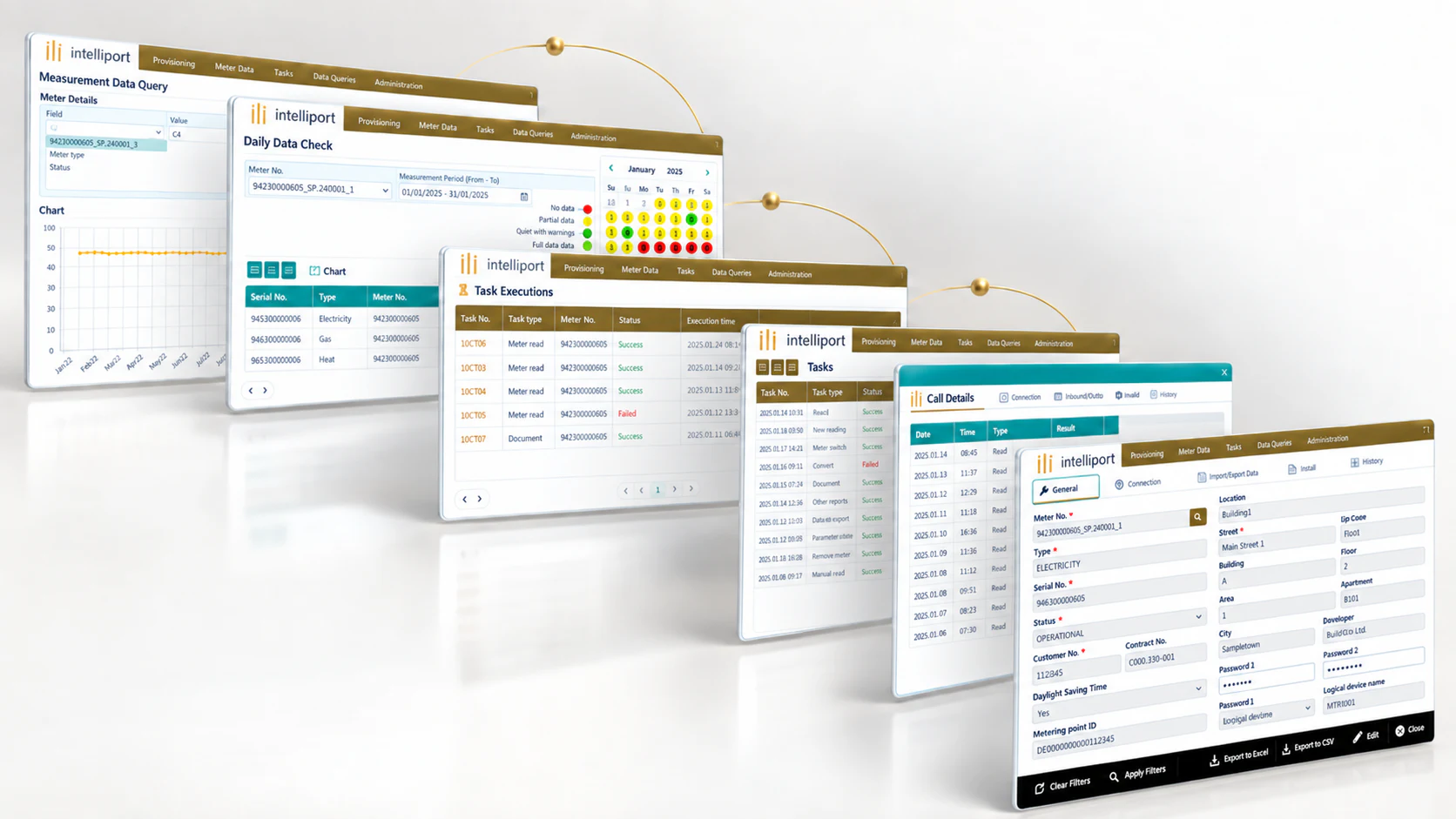
IntelliHES is a meter-manufacturer-independent Head-End System. It brings readings, records and readout operations for residential smart meters and industrial meters into a shared workspace.
- Meter records: administer meter identifiers, models, firmware versions and communications details.
- Provisioning: maintain data and states associated with commissioning meters.
- Meter data queries: search by meter and OBIS code and display results in charts and tables.
- Daily data checks: review available and missing readings in a calendar.
- Readout task tracking: review executions and successful and failed runs.
- Master-data management: maintain shared reference data for meter administration and queries.
Supported smart meter manufacturers include Sanxing, Sagemcom, Elster and Kaifa. Communications and accessible readings are matched to the specific model. Supported industrial meter manufacturers also include Itron, Sagemcom, Landis and Iskra.
Gateways: a supplement for meters without communications
An external gateway is used where a meter has no built-in remote communications but offers a readable interface or pulse output. This allows parts of an existing meter estate to be included, while direct mobile connectivity remains the primary approach for residential smart meters.
- IPS-501: reads the P1 port of compatible electricity meters and provides mobile data delivery for meters without built-in remote communications and with a readable P1 port.
- IPS-520/521: transmits consumption data from compatible gas meters over a mobile network through an external gateway.
- IPS-530: transmits readings from pulse-output water meters over NB-IoT / Cat-M1 networks.
- M2M Platform: remote configuration and supervision of supported supplementary communications devices, including support for the IPS-501.
The supplementary gateway’s integration with IntelliHES is designed around the specific meter, interface, message format and collection mode.
Deployment aligned with the existing meter estate
Deployment starts with assessing residential meters and the utility’s intended data use. Connectivity and collection are checked on a selected meter group before broader deployment is prepared.
- Meter estate: manufacturers, models, built-in communications, accessible measurements and existing records.
- Mobile connectivity: coverage at actual metering points and alignment of communications modules and network settings.
- Data collection: readout frequency, timestamps, units and tracking of missing readings.
- IntelliHES deployment: meter identification, provisioning, data checks and readout task workflows.
- Downstream processing: data transfer requirements for existing utility systems.
- Acceptance: agreement with meter readings, data arrival and verification of daily operations.
Which meter estate should we start with?
Residential meter manufacturers and models, built-in communications, the number of metering points, the required readout schedule and connected utility systems are the starting points for a technical discussion. These define central meter management with IntelliHES and any supplementary devices needed.