
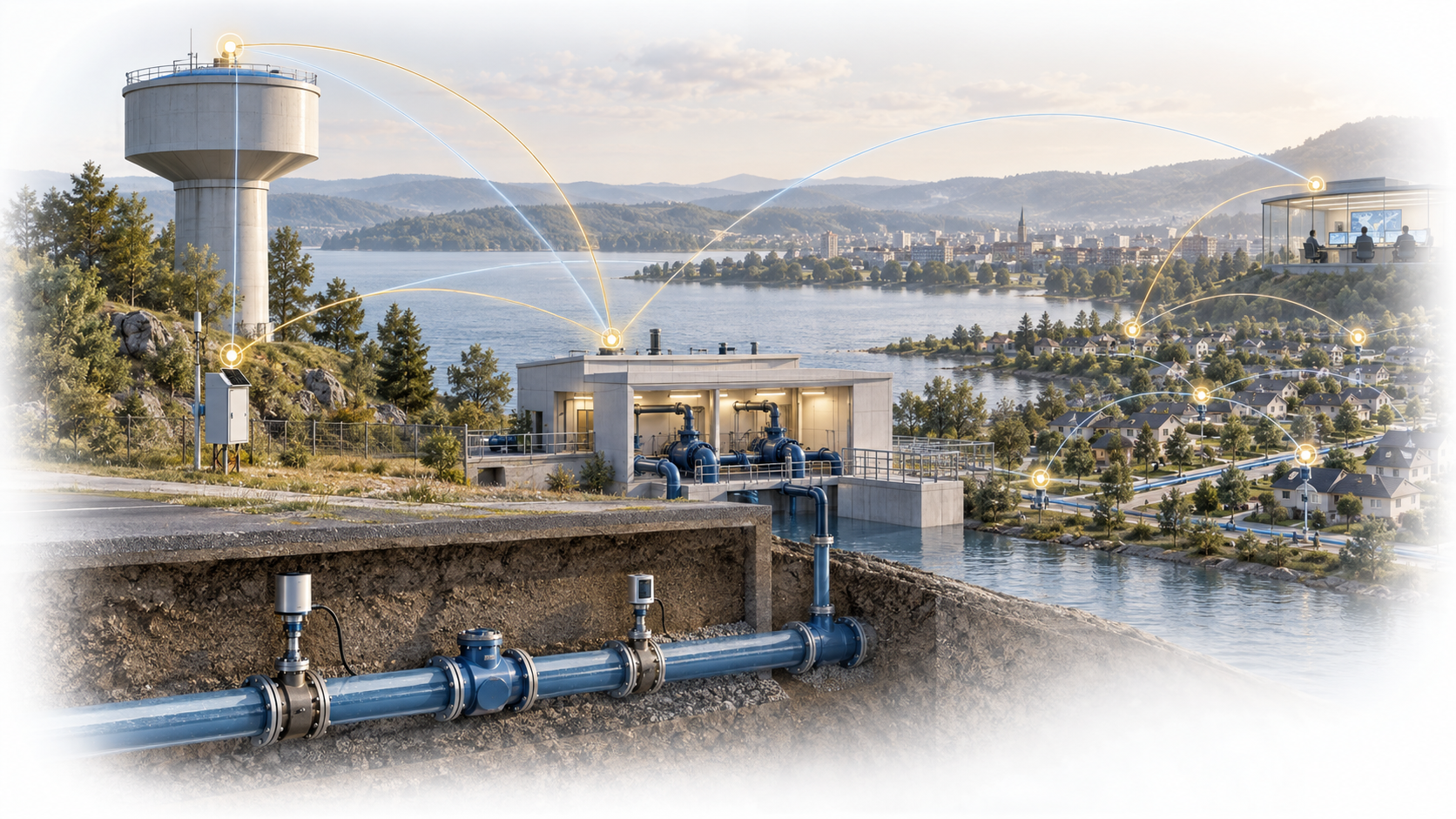
What does industrial IoT mean here?
A water network spans many separate assets, yet its data can form one operational picture
Wells, reservoirs, pumps, meters and pressure sensors are dispersed across a wide area and often operate at different levels of automation. Industrial IoT connects their field data so that water volumes, pressure, energy demand and facility status can be considered together.
Industry context
2026 2028in the EU timetable, national leakage-level assessments are followed by an EU-wide leakage threshold.
What does this mean for digitalisation?
Water loss is increasingly a measurable operational and regulatory issue supported by comparable methods — which depends on consistent field data.
Source:European Commission: Drinking Water Directive implementation timeline (2026)
An EU regulatory timetable, not a utility-specific leakage target or savings promise.
The digital opportunity
Not one technology, but a connected operational picture
Value emerges when field data is connected to the industry’s actual decision contexts.
Water balance and loss analysis
District and bulk-meter data can narrow the area to investigate; measurement does not replace on-site leak detection.
Pressure, pumping and energy
Interdependent values can be reviewed on a common timeline, allowing the effect of interventions to be measured.
Remote facility supervision
Wells, reservoirs, treatment sites and pumping stations can be organised into a more consistent operational view.
Consumption and asset data
Remote readings, equipment status and network context can help distinguish technical and consumption-related anomalies.
Where can it improve visibility?
From field signal to useful context
Earlier anomaly detection
District measurements and time series can help identify where to investigate.
Coordinated operations
Pressure, pumping and reservoir levels need not remain isolated figures.
Measurable interventions
Before-and-after data can be compared in the same operational context.
The data path
From measurement point to operational decision
Field measurement
Flow, pressure, level, consumption or equipment status.
Data connection
Connecting measurement points in a way suited to local conditions.
Shared analysis
Examining district, facility and time-based relationships.
Where does Intelliport fit?
In the layer between the field point and usable data
Intelliport focuses on connectivity, device management and system integration adapted to the actual environment. We do not replace the industry process, professional judgement or receiving applications.
Field data collection
Connecting existing and new measurement points through communications suited to the site.
Remote supervision
Central management of connectivity and edge-network devices across distributed sites.
System integration
Transferring and, where needed, processing measurements at the edge for receiving operational systems.
Related solution
Explore the detailed solution
The detailed page presents five water-utility tasks and shows how measurement relates to intervention.
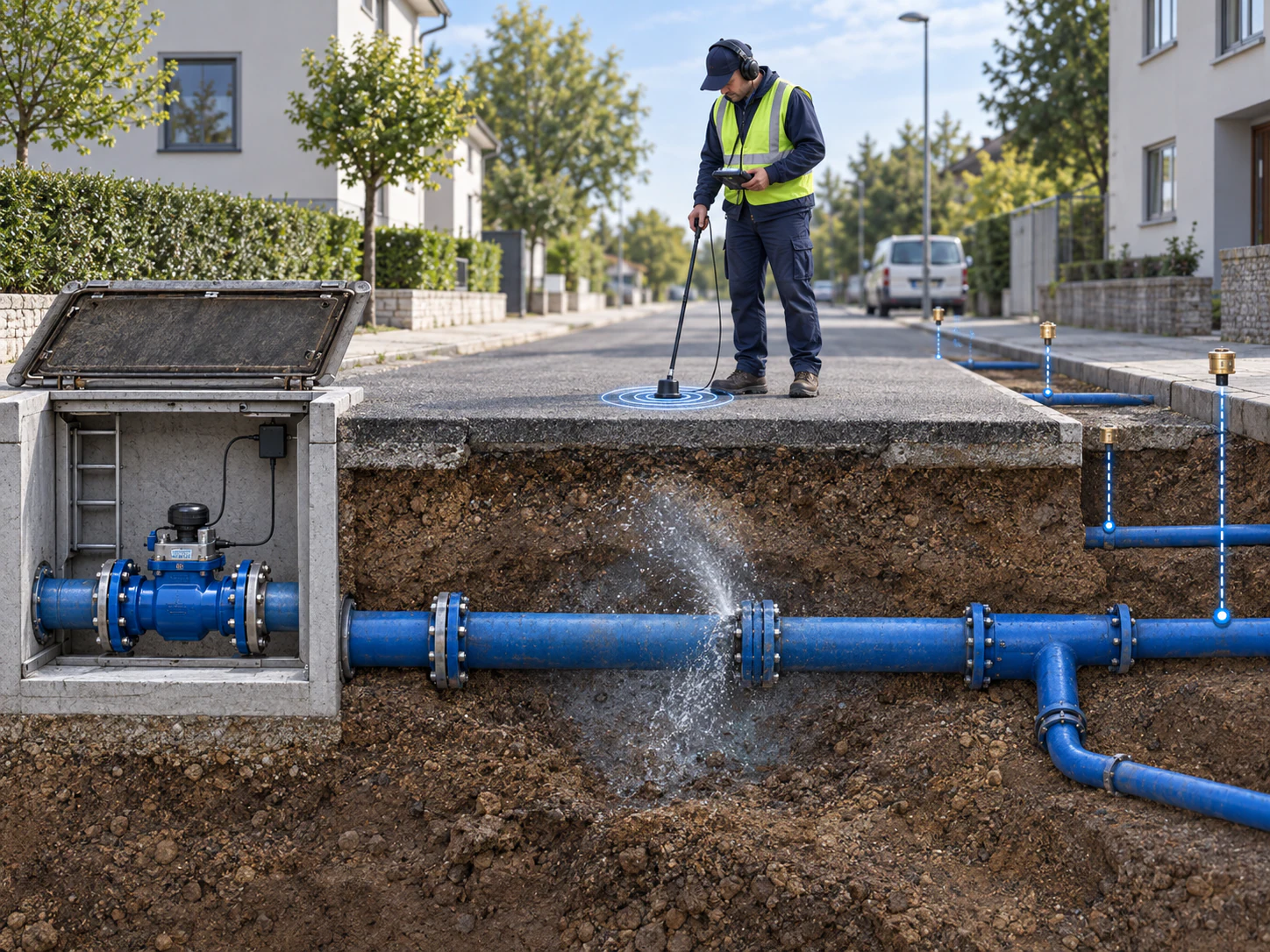 Industrial IoT · SolutionWater-network supervision and optimisationWater loss, remote reading, pressure, facilities and pump operation in one coordinated solution family.Explore solution
 Designed for your environment
We start with your actual operating environment
Network models, measurement quality, integrations and control responsibilities must be agreed in the utility’s actual technical environment.